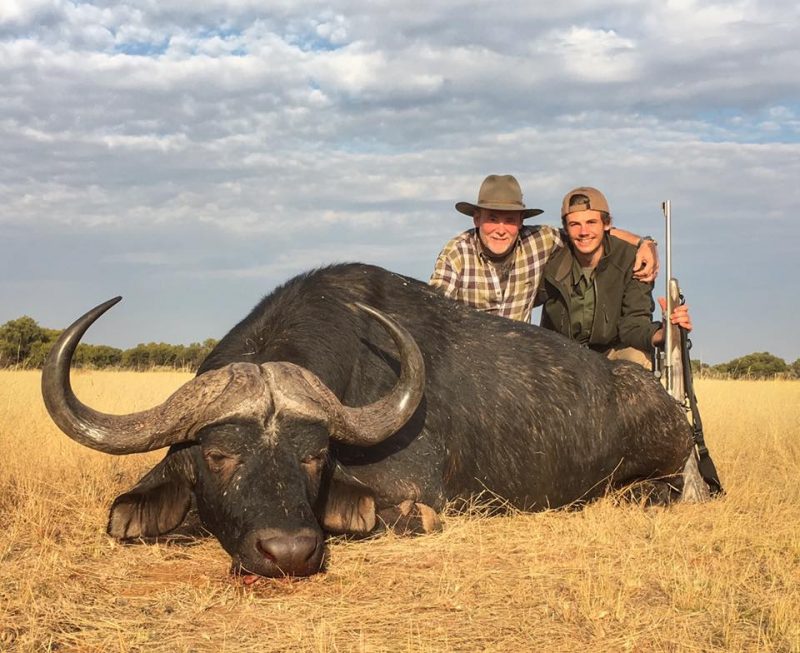
“Hunting buffalo with your son is an incredible experience.” Richard Mann
“We hunted hard, made several stalks and walked for 7 miles on our Buffalo hunt. Finally, we got the wind right. At 100 yards, Geoffrey told me it was time to take the shot. I collapsed into a seated position and shouldered the rifle. Then the training that I received from my dad (Richard Mann) and at Gunsite academy took over. I cycled the action instantly, and then I fired again. I’ve scored go-ahead goals in soccer, I’ve hit buzzer-beaters in basketball but none of the above compares to hunting a Cape Buffalo in Africa.The 100-yard walk to the Buffalo felt like another mile.
He was massive. Beautiful! He was a gift, from my father and from my friend.
He was a gift from Africa. Africa is a special place. It’s where you become a Buffalo Hunter. And it’s a fine place to grow up.” Bat Man
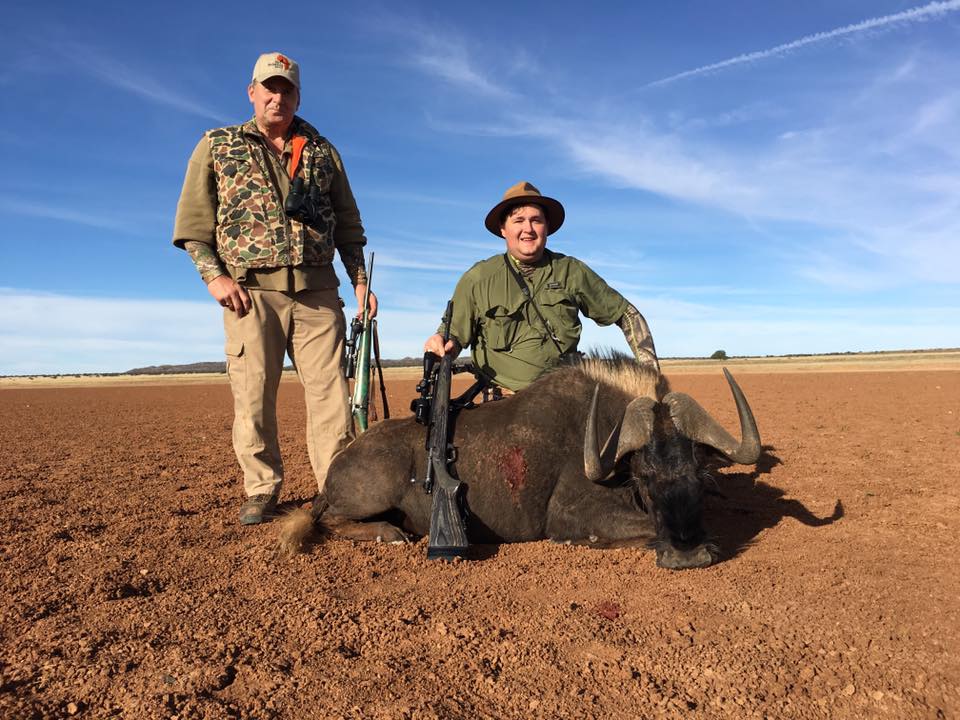
A Boy and a Buffalo
South African Buffalo Hunt by Empty Cases
Trophy Hunting Buffalo
The term Big Five game was coined by big-game hunters of old and it refers to the five most difficult animals in Africa to hunt on foot.
Cape Buffalo (Syncerus Caffer) is the most popular to hunt from the Big Five and will give a hunter a challenging and dangerous hunting experience. It is also referred to often as the most dangerous of all the Big Five to hunt. Although it appeared docile when grazing in a herd this animal can be extremely aggressive when agitated or wounded.
Buffalo are heavily built & bulls are black while cows have a reddish brown tint with the black. Bulls have heavy horns with well developed Boss. Cows’ horns are much lighter – they have broad muscle and large ears situated behind the eyes.
Size: Mass 750-800kg. Shoulder height: 140cm. Habits: Buffalo move around in large family units. The old bulls group together in bachelor groups and in the dryer season they tend to graze near water. They reached puberty at three years of age. Gestation takes 330-346 days i.e. +/- 11 months.
The Buffalo is a non-selective grazer who drinks every day. It occasionally will browse. Buffalo will lick termite mounds and will also lick the mud stuck to their coats from wallowing in mud pools, off each other in order to get the nutrients lacking from their diet.
The horns of a bull can be quite spectacular in spread with a deep curl and a solid boss which covers the forehead.
Buffalo are found in southern Africa in herds which varies in size.
As with all hunting, shot placement is paramount when hunting the Cape Buffalo – a rifle of .375 caliber is adequate. To succeed a hunter needs to have put in the necessary preparation to be comfortable with his rifle as well as practicing on the shooting range. Trust the judgment of your Professional Hunter with shot placement and the selection of rifles and bullets when hunting the Buffalo.
Buffalo and you by Peter Flack (African Outfitter Magazine)
Buffalo may be done with you but you are never done with them, not even if you have never hunted them. They loom so large in the hunter’s lexicon, they can simply never be ignored. Even if you are a committed plains-game hunter, you know they are out there waiting for you. They are the buffalo in the room, even when never mentioned in polite hunting company. You know that some day, if and when you can afford it, you are going to want to measure yourself against this ultimate game animal.
Why is it that your first Buffalo, for those of us that have been lucky enough to experience this right of passage, this double-edged opportunity to measure ourselves against this ultimate hunting challenge, is the one we all remember with the utmost clarity? We can remember that we saw, heard, smelt everything with our senses on such high alert they were almost supernatural. It was almost as if we were in our innermost beings and at the same time to the tip of our fingers and the nails of our toes. Certainly, up until then, we had never experienced anything similar.
And it is this two-stage reaction to the number one of Africa’s Big Five, which is primarily responsible, I believe, for the whole variety of differing results from a fair-chase hunt for this incredible animal that some people still argue is no different to cattle, on the one hand, and Africa’s most dangerous, four-legged beast, on the other hand.
To some, the experience is just too much. I remember a Zimbabwean PH telling of a wealthy Arab hunter haring off through and over the bushes in his white, flowing Arab robes when he came face to face with his first buffalo at 40 paces. A good friend and one of the most highly experienced buffalo PHs in Africa today, nearly came to a premature end when his American lawyer client wounded a big bull at a range so close that it is just about impossible to imagine how he could have placed the bullet where he did – centre Mrs Venter! I can go on and on, including the case of the very nice man who accompanied Derek and me to Mozambique for his first buffalo hunt, and who wounded two, one after the other, never to find either one no matter how long and hard he looked.
I suppose these and other similar stories ( and you can read about any number of them in my book, Hunting the African Buffalo by Peter Flack) serve to keep the buffalo legend alive and well in Africa. They also confirm the challenge that these magnificent beasts have always offered and always will.
Basic Lessons learned on a Buffalo Hunt by Derek Carstens:
- Clarify at the beginning of the hunt with your PH precisely what you expect of him, come the time to shoot. Once on the shot, it is no time to enter into protracted negotiations, clarifications or discussions.
- If you are close, comfortable and confident on the animal of your choice, take the darned shot. Just let your PH know which animal you are drawing a bead on.
- Don’t hamstring yourself in search of the perfect shot. Optimize.
- Know your ballistics. This was a big lesson for me as I do a lot of hunting back home with a flat-shooting 25-06 and seldom have to compensate for bullet drop. In this sense the .375 is not in my muscle memory and the 300 gr solid would have dropped by at least 3” to 4”.
- Improve your knowledge of the animal’s anatomy that you are hunting to ensure a well-executed, imperfect strategy.
- And then critically remember it is all about the last hundred yards. All the sweat and toil in the tracking kilometers leading up to that point count for naught if things fall apart in the home straight. So be close to your PH at all time, and be ready when the action comes, as it tends to be faster than you may be used to.


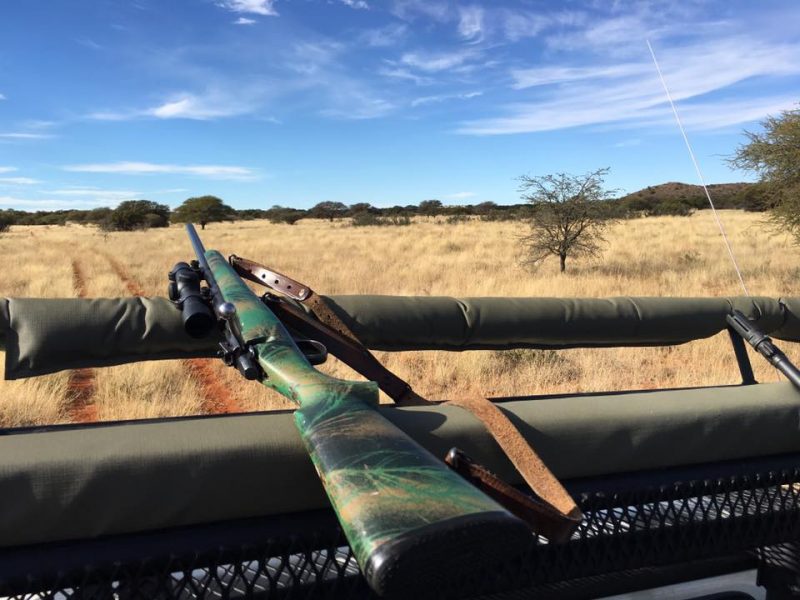


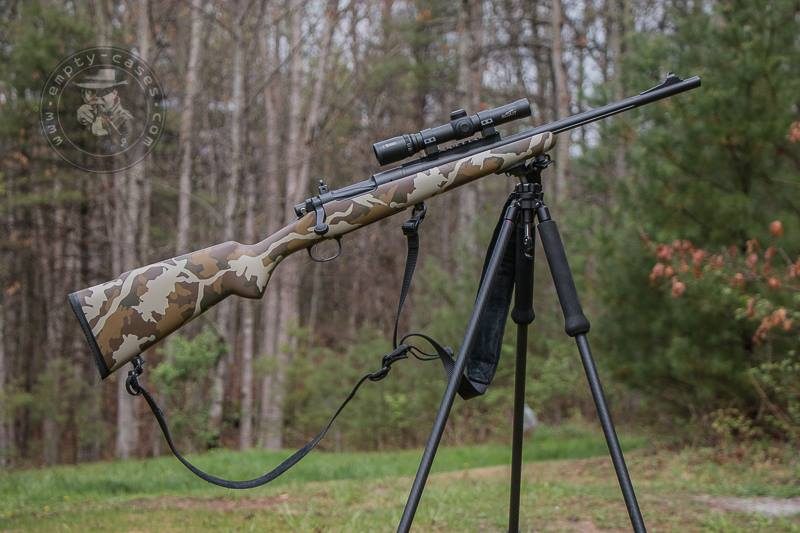
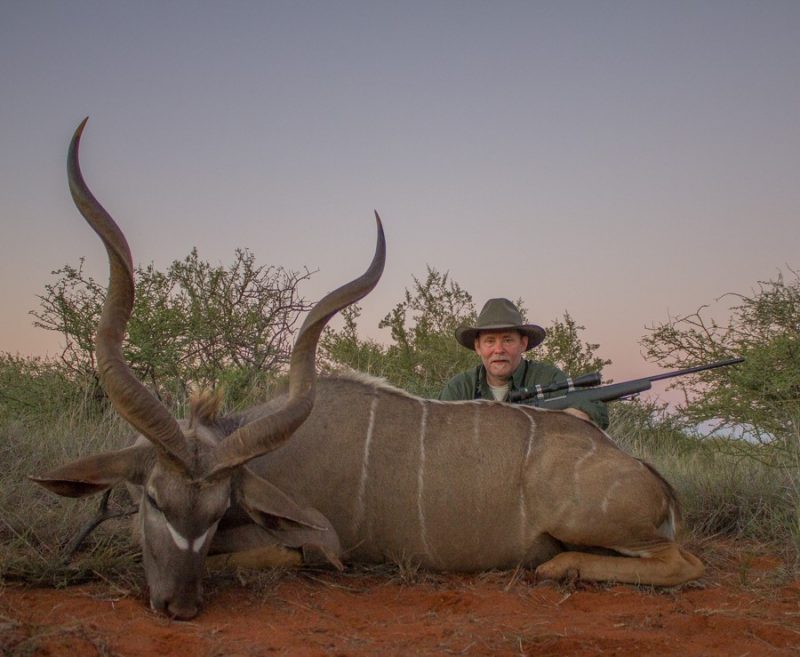
 Jim and his Gunsite Scout #2.













![TIME IN AFRICA WITH THE ONE YOU LOVE 14022016 [Autosaved] [Recovered]](http://fortrichmond.co.za/blog/wp-content/uploads/2017/02/TIME-IN-AFRICA-WITH-THE-ONE-YOU-LOVE-14022016-Autosaved-Recovered.jpg)